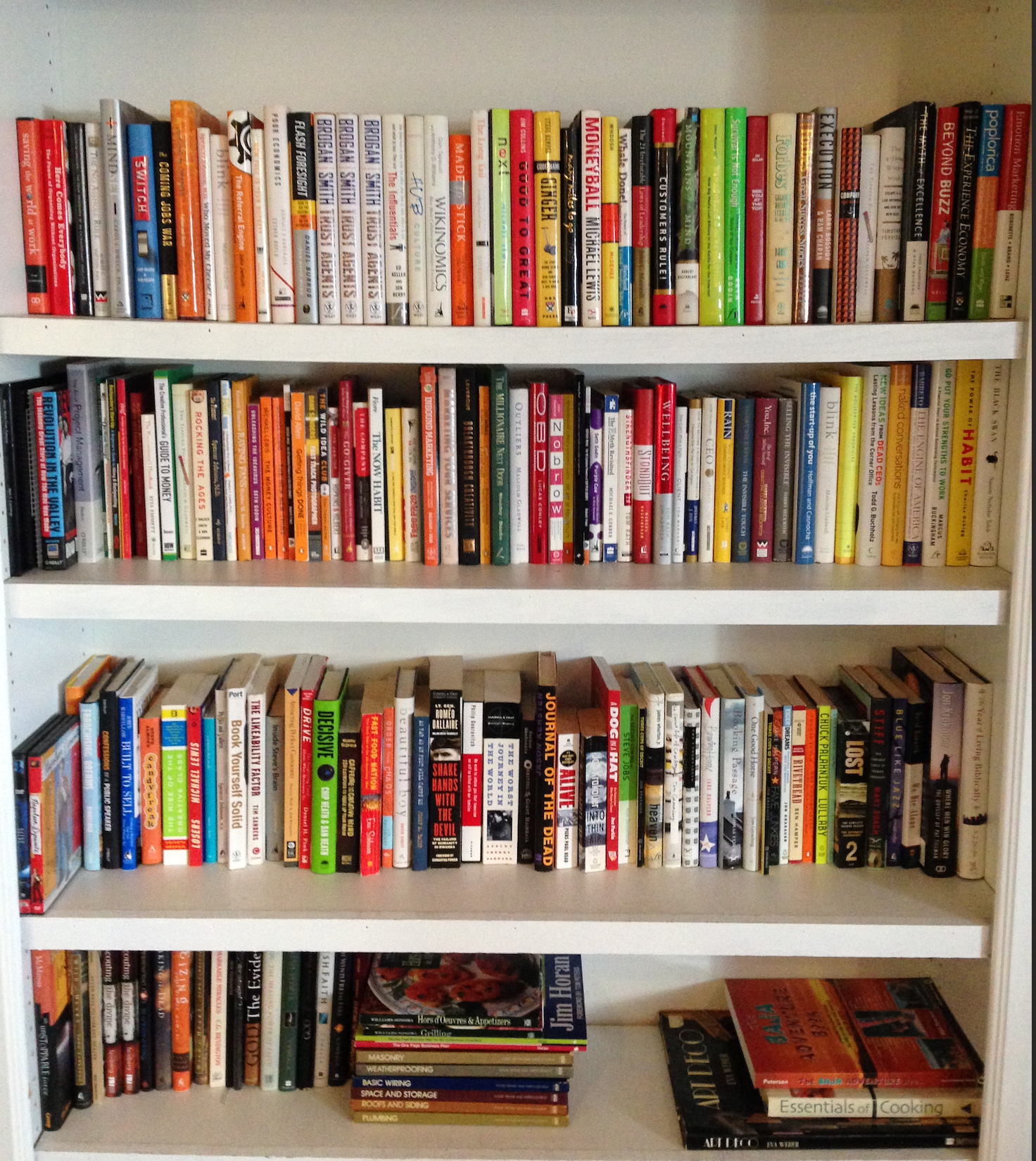
Atomic Habits by James Clear
I tend to swing for the fences, and Clear makes a good case for playing small ball with a habit I can repeat even on a busy day.
Deep Work by Cal Newport
If your best thinking happens in the hour before everyone else logs on, Newport shows you how to protect that kind of focus during the workday.
The E-Myth Revisited by Michael E. Gerber
If every decision in your business still lands on your desk, Gerber shows you how to turn what you know into systems other people can run.
Getting Things Done by David Allen
Allen’s question, “What’s the next action?”, turns a project that’s been taking up space in your head into something you can actually do.
Good to Great by Jim Collins
Collins makes a case for one of the harder decisions in business: figuring out what to stop doing so your team can get exceptionally good at something that matters.
How to Become a Rainmaker by Jeffrey J. Fox
Fox gives anyone who has to bring in business a better way to prepare for a sales call: figure out what solving the problem would be worth to the customer.
Linchpin by Seth Godin
For anyone who’s ever thought “somebody should fix that,” Godin makes the case for being the person who does, even when it falls outside your job description.
Love Is the Killer App by Tim Sanders
Sanders makes generosity practical: share what you know, introduce two people who should meet, and help without keeping score.
Made to Stick by Chip Heath and Dan Heath
If you’ve ever explained an idea perfectly and watched it disappear after the meeting, the Heath brothers show you how to make it easy for someone else to retell.
Order from Chaos by Liz Davenport
If the papers on your desk are there to remind you to do something, Davenport offers a simple system for tracking the work so you can finally clear the desk.
Purple Cow by Seth Godin
Godin poses a question worth asking before you spend a dollar on marketing: what have you built that a customer would tell a friend about?
Rework by Jason Fried and David Heinemeier Hansson
The founders of 37signals challenge the reflex to add people, meetings, and features when cutting the scope could get a good idea into customers’ hands sooner.
Selling the Invisible by Harry Beckwith
When clients can’t judge your work until after they hire you, Beckwith shows how small things they can judge, like how well you listen, help them decide whom to trust.
Sprint by Jake Knapp, John Zeratsky, and Braden Kowitz
A five-day process for turning “we could debate this for months” into a prototype you can put in front of real customers by Friday.
Start with Why by Simon Sinek
If your company is easy to describe but hard to get excited about, Sinek helps you put words to the reason people might care.
StrengthsFinder 2.0 by Tom Rath
Rath helps you put a name to the things you do so naturally you assume everyone can do them, then find more ways to use those talents at work.
The Tipping Point by Malcolm Gladwell
Gladwell explores why an idea can go nowhere for months until the right person carries it into a new circle and suddenly it’s everywhere.
Traction by Gino Wickman
For leadership teams that keep having the same conversation, Wickman lays out how to choose a handful of 90-day priorities and give each one a clear owner.
Wellbeing by Tom Rath and Jim Harter
Rath and Harter give you five places to look when work is going well, but life feels off: career, relationships, finances, physical health, and community.
Who Moved My Cheese? by Spencer Johnson
A short fable about how long we’ll keep returning to the place where something used to work, and what it takes to go looking somewhere new.